
What you wonder but might not dare to ask
These are the questions we are asked most often, in the order they tend to come when someone starts thinking it over. The uncomfortable ones are here too, such as whether we can advise you against coming, whether you have to keep silent all week, and what it actually costs. If your question is not here, call us and we will answer it.
Before you apply
I have already been in therapy, on retreats and on several personal development courses. Can Step 1 still give me something?
Yes. Previous experience is neither a requirement nor an obstacle. Step 1 is not set up as an introductory course where you learn theories about personal development. The work starts from your own life as it is now, and from what happens in you during the week. That is why two people with completely different experience can work at very different depths in the same group. If you have already worked a great deal with yourself, feel free to mention it in the conversation before the course, so that we can judge together whether the format adds something you have not already done.
I am doing fine, really. I am just facing a new phase of life. Is the course still for me?
Yes, it can be. You can come with a question just as well as with a problem. Some people come precisely when something is changing – after a separation, when the children have moved out, before retirement, at a change of career, or when life works but the question “what do I want now?” has become important. Step 1 is about your life as it is today, and can give room to examine that question without you having to know the answer in advance.
What does it cost?
SEK 39,000 per step, the same for everyone. As a private individual you pay SEK 39,000 and nothing is added. If the invoice goes to a company it is SEK 48,750 with VAT, which the company normally deducts.
You can pay in instalments, interest free over 6 or 12 months, if that makes it easier.
What language is the course held in?
In Swedish. If you need it we arrange simultaneous interpretation into English at no extra cost. Do tell us in good time, so that we can sort it out.
How many are we in the group?
There are no more than twenty participants in Step 1. Course leaders, who lead the week, group leaders, who follow your smaller group, and assistants are also with you all week, so there is always someone to turn to.
What is included?
Meals and lodging, of course. You have your own room with shower and toilet, and bed linen and towels are provided.
The week is intense and shaped around each of you, which is why the course carries so many staff. Course leaders, group leaders and assistants are there throughout.
What does registering interest commit me to?
Nothing at all. First you get a reply by email with a link where you book a time for a longer conversation, where we can listen to what you are looking for and you can ask us anything you wonder about.
The reply usually comes the same day, or on the first working day after. If it takes longer, have a look in your spam folder, and do add info@vitalisera.se to your contacts.
I am close to burning out. Should I wait until I am stronger?
Not necessarily, and it is one of the most common questions we get. Many people come here precisely because they have burnt out before and recognise the road there. There are often patterns underneath, such as not being able to say no, taking responsibility for everyone else, or never feeling that it is enough, and those patterns rarely disappear through rest. Being tired does not disqualify you. We have people on the team who have worked with burnout for decades, and we adapt the week to what you have the strength for. What applies to you, right now, is what the conversation before the course is for.
Can you advise me not to come?
Yes, that does happen, although it is not the usual outcome. In the phone conversation we try to understand what you need right now, and sometimes we conclude that another kind of help is what you need.
The course is for people who are struggling just as much as for people who are feeling well. Many arrive after a crisis or something hard they have been through, or because they feel lost and worn out, while others want to get to know themselves in depth, and every one of those reasons is enough. Someone on steady ground can also often take in more.
Do I have to take further courses afterwards?
No. Step 1 is complete in itself and takes many people a long way, and none of us will push you onwards.
I am in a relationship. What do you recommend?
We recommend that you take the course at the same time, or one after the other, depending on what the two of you are most comfortable with. The week becomes an important experience, and it is valuable to be able to relate to the other person’s experience of it. If only one of you goes, it can become something that person feels alone with.
Whatever you decide, talk it through together first.
How is it decided whether the course is right for me?
You and we decide that together. You register your interest, book a phone slot, and after that conversation we make up our minds. How we think about it is set out on the page about safety and suitability.
Do I have a conversation before the course?
Yes, always. Nobody gets a place with us without the two of us having spoken first.
What is the life story?
A form with some thirty questions about parents, upbringing, relationships, work and what has shaped you. You receive it once you have a place and send it in no later than two weeks before the course starts. The course leadership reads it beforehand, no one else on the staff does, and the papers are shredded when the course ends.
Who holds the preparatory conversation?
Someone from our team. Which of us it will be is settled when the time is booked, and you get the name beforehand.
What do we talk about in the preparatory conversation?
About what you are looking for, how you are at the moment, and whether this format and this date suit you. You also get to ask every question you have, and there are usually quite a few.
What outcomes can the conversation lead to?
Either we go ahead, or we suggest that you wait a while, or we say that another kind of support would suit you better right now. If the answer is anything other than yes, we also tell you why, and where you can turn instead.
Is Vitalisera right for me if I am really struggling right now?
Get in touch and ask us, rather than guessing on your own. Many people come to us during a heavy period, and that is not what makes us say no. In the conversation we look together at whether the week suits you now or further ahead.
We are not healthcare, though, and we make no diagnoses. If you need care, that is where you should go. In Sweden you can reach 1177 around the clock, and if there is danger to life, call 112.
During the week
Do I have to stay silent?
Yes, silence applies outside the course room. It may sound severe, but it usually comes as a relief, because every social demand falls away and you are responsible for nobody but yourself.
Inside the course room we talk. And during the last day and night the silence is lifted, so anyone who wants to can speak freely again.
What does a day look like?
We plan the whole week for you. Course leaders and group leaders take you through the week in a safe pair of hands, and you get the information you need as the day and the week go along.
The days are full, from early morning until late evening, with breaks in between for rest, reflection and perhaps a walk down to the lake. You are not given a schedule in advance, and that is deliberate.
Can I come with someone I know?
That is fine, as long as you do not feel that their presence keeps you from focusing on yourself. During the week you are on your own journey. Afterwards, though, it can be good to have someone to share it with.
How long is Step 1?
Seven days and eight nights, a whole week.
When do I arrive?
On Wednesday evening. Check-in opens at four in the afternoon, so you can arrive from then and settle in without hurrying.
When does the week end?
Step 1 ends on Thursday morning, after eight nights. Step 2 and Step 3 run until after lunch.
Do you work in a group?
Yes. The week moves between work in the full group and work in smaller groups with the group leaders.
Are there individual sessions?
Yes. Part of the work you do on your own, and there are chances for individual conversations if you need one.
Is there time to myself?
Yes. There are breaks that give you time to rest and reflect, and you have your own room, so there is always somewhere to withdraw to.
How intense is the course week?
We say it as it is: the course week is intense. The days are full and can be emotionally demanding. You decide what you share.
Can I use my phone during the week?
No. You hand in your phone when the course begins and get it back when the course ends. The week is for you, not for whatever is happening in your phone.
Can my family reach me?
Yes, through us. Give our number, +46 8 400 155 99, to those who may need it. If something is important and urgent it reaches you, so you can leave that worry at home.
Can you swim?
Yes, there is a beach down by the lake. During the course week we have the whole estate to ourselves.
Is there parking?
Yes, there is plenty of space at the estate.
Is there internet?
According to the course centre, wireless internet is available only in the lobby, and you have handed in your phone anyway.
What methods are used?
We work with breathing exercises, body awareness, meditation and guided reflection, with the kinds of things that help you make contact with your body and not only with your thoughts. What we do is personal development, not medical care, and we promise no medical effects.
Is there a chance to be outdoors?
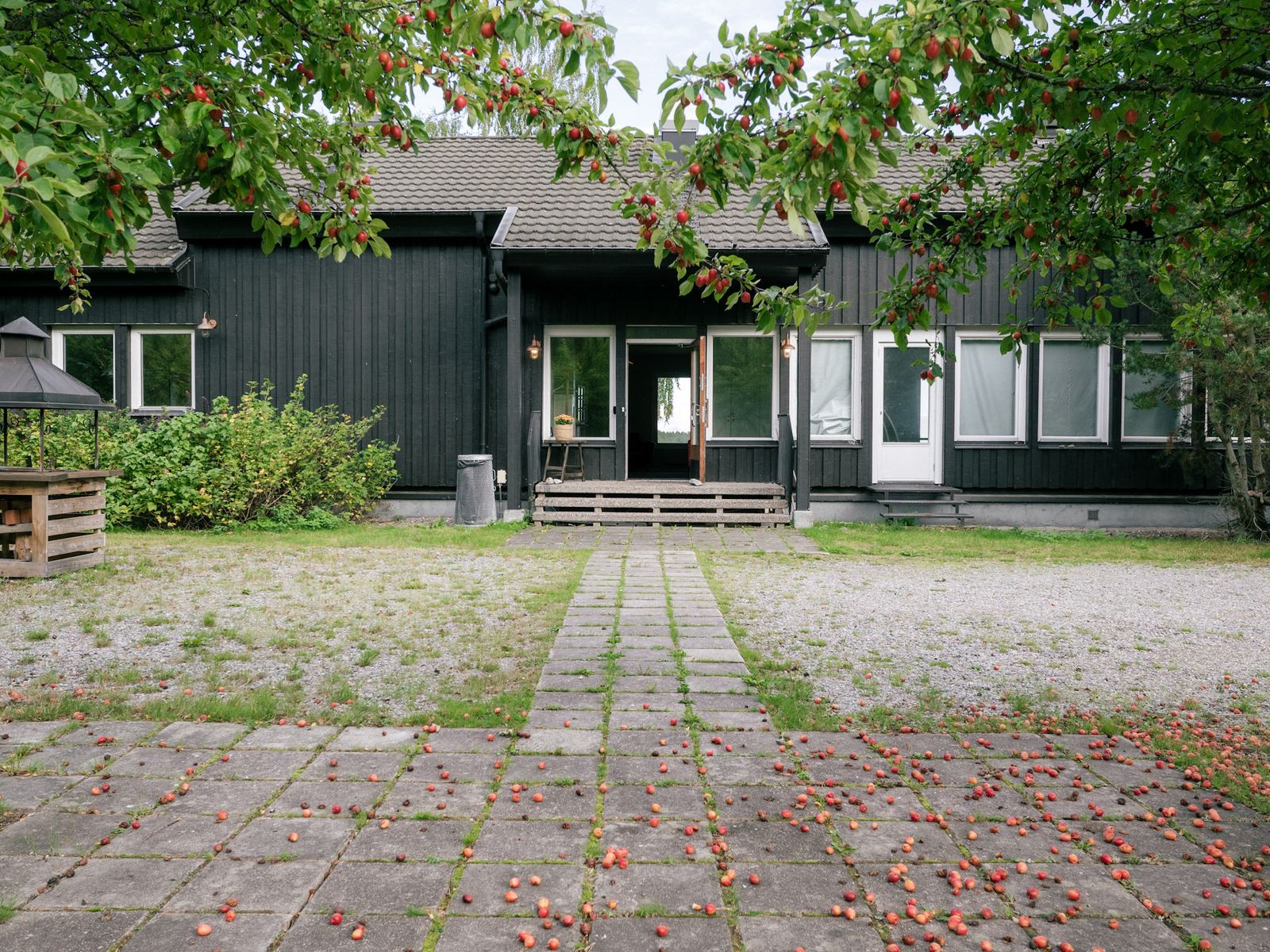
Yes. Aspö kursgård sits on an island in Lake Båven, and the breaks give you time to get outside, perhaps a walk down to the water.
What it is and what it is not
What is Vitalisera?
Vitalisera is a residential course in self-knowledge and personal development for adults. You stay at the course centre for the whole week, and the course has been held in this form since 1985.
What do you mean by personal development?
For us it means looking more closely at the life you are living right now, at your feelings, your needs and the patterns that keep returning. We do not promise that you will arrive at anything in particular, and what you do with what you see is yours.
Is Vitalisera healthcare?
No. We are not healthcare, we make no diagnoses, and we do not replace an assessment or a treatment within the health service. If you already have a doctor or a therapist, you keep them.
Is Vitalisera psychotherapy?
No. What we hold is a course in personal development, and you come here for your own sake, not to be treated. But we did not invent the methods ourselves: many of them come from therapeutic traditions, and the leaders have therapeutic training behind them. We make no diagnoses and treat no illness, and any care you already have, you keep.
Is Vitalisera a retreat?
Many people find us by searching for a retreat, and the week has much of the form of a retreat: you leave everyday life for seven days and stay at a course centre in the countryside, without your phone. We still call the week a residential course, because the days are intensive and experience-based and filled with work rather than rest. So if you are looking for a retreat you are in the right place, as long as you want to work on yourself.
Is it a residential course?
Yes, you stay at the course centre for the whole week. Leaving everyday life for a week is part of how the course works.
Who is Vitalisera for?
For adults who want to get to know themselves in depth. Whether the format suits you in particular is something we work out together in the conversation, before you decide.
Is the course right for me if I mainly need rest?
If all you are looking for is rest, a recovery retreat is a different and often better route, because here you work. If, on the other hand, you are tired because something has gone on for too long, it is precisely the patterns behind the tiredness that the week is about, and how much you can manage that week is something we find out in the conversation beforehand and adapt to.
The courses in three steps
How many steps do the different courses have?
Step 1 and Step 2, and then two separate deep dives called Step 3a and Step 3b.
Where do I start?
With Step 1, always. It is the foundation of the course, and you need nothing with you beforehand.
Do I need to have taken an earlier course before Step 1?
No. Most people who come here have never done anything like it before.
What is Step 1 about?
About the life you are living right now, about your feelings and needs, and about the patterns you recognise in your own behaviour.
What is Step 2 about?
About childhood and the family you grew up in, and about how that early history can live on in your adult life.
What is required to take Step 2?
That you have taken Step 1 first, and nothing else.
What should I bring to Step 2?
A few photographs of yourself as a child. What the week holds is described on the Step 2 page.
What is Step 3a?
A deep dive into adult relationships, into closeness, communication and boundaries.
What is Step 3b?
A deep dive into the existential questions, into presence and into who you are.
Do Step 3a and 3b have to be taken in a particular order?
No. Once you have taken Step 1 and Step 2, you can take them in whichever order you like.
Is one course enough, or will you encourage me to take more?
You can feel entirely comfortable taking just one course. Step 1 is complete, and for many people it goes a long way. At the same time it is common for a curiosity about carrying on inwards to be sparked afterwards, and further steps are there for anyone who wants them. But it is not something you need to have a view about now.
Accommodation and food
Do I stay at the course centre the whole week?
Yes, the whole week, and you have a room of your own to go to when you need to be by yourself.
Where is the course held?
At Aspö kursgård in Stjärnhov, in Södermanland, on an island in Lake Båven.
What kind of food is served?
Vegetarian and largely vegan, cooked on site by a chef. Organic and locally grown produce as far as possible. If you have allergies or need a special diet for medical reasons, tell us before the course and we will sort it out.
Price and payment
Can I change my mind?
Yes. As a private individual you have fourteen days to withdraw from the day the agreement was made. If the course starts within those fourteen days, the right to withdraw ends when the course begins. That is what the terms say.
How do I pay?
You receive an invoice, and there are several ways to pay it. Many people ask their employer for financial support, since the course can count as professional development.
Payment can also be spread through instalments. The payment terms are gathered together with the dates and the price.
Is course material included?
Yes, course material is included in the fee for all our courses.
Is follow-up included?
Yes. A few days after the course we call you, and that conversation is included. You get it without asking.
Where can I see the planned course dates?
Every date we have published is on the dates and price page, with Step 1, Step 2 and Step 3b kept separate.
What happens if the course is cancelled?
Then you get back everything you have paid, without deduction. Do book a flexible ticket, since we do not cover travel costs. The details are in the terms.
What happens if I go home early?
If you break off during the first three days of the course you get the course fee back, but not the registration fee, and after that there is no refund. If you fall ill you may instead complete the course on a later occasion. It is all in the terms.
After the course
I have heard that many people make big life changes afterwards. Is that true?
Everyone reacts differently. Sometimes someone feels that something in their life needs to change, and then we always say the same thing, which is to wait at least six months before making the bigger decisions. That gives whatever has been set in motion time to settle, both in you and in everyday life, and it gives you time to sense what you actually need.
Who follows up with me?
One of the group leaders or course leaders, that is, someone who leads the courses with us.
What happens after the course?
The last day and night differs a little from the rest of the week. After that the evening group keeps meeting for at least three weeks, and on a few weekday evenings each term we hold free community evenings for everyone who has taken a course. There is more about coming home on the After the course page.
Do I get a certificate?
Yes. Once you have taken the course you receive a written certificate from us.
Contact
What is Vitalisera’s email address?
You can reach us at info@vitalisera.se. Do write and tell us what you are wondering about, as briefly or at as much length as you like.
What is Vitalisera’s phone number?
+46 8 400 155 99. Do call if you would rather talk than write. Some questions are easier to ask out loud than to put in an email.
Read also
Next course dates
The week starts on Wednesday evening and ends on Thursday, seven days and eight nights. The dates below include both the arrival day and the departure day.
4.99 out of 5 on Google and Facebook, calculated on all reviews.
We get back to you and answer your questions. Registering your interest commits you to nothing, and you decide only after your conversation with us.